By: Nisaa Kirtman, Alex Gurn, Ayesha Boyce, Michelle Rosenthal, and LaShaune Johnson
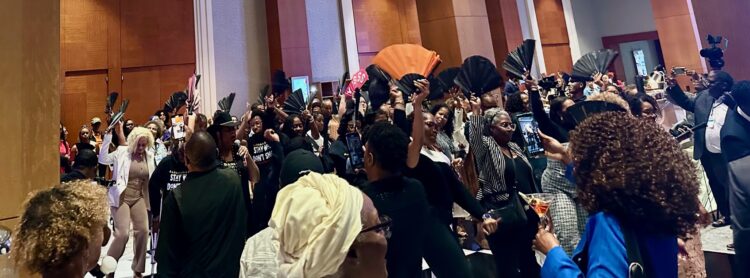
Photo by Nisaa Kirtman, Day 1 of the State of Black Health Conference
“I left feeling affirmed, connected, and refueled. This was more than a conference—it was a movement.” – Conference Participant
That sentiment, voiced by one attendee, captures the essence of the 2025 State of Black Health Conference, held September 15–18 in Charlotte, North Carolina. Hosted by The Center for Black Health & Equity, the biennial conference brought together more than 500 public health professionals, advocates, scholars, and community leaders from across the country. It wasn’t just a convening—it was a declaration of purpose. Guided by the theme Community Empowerment, Innovation, and Healing, the conference reimagined health equity as liberation work, uniting participants in shared action and renewal.
To understand its reach and impact, Rockman et al Cooperative (REA) served as the external evaluation partner, using a Culturally Responsive and Equitable Evaluation (CREE) framework. As part of REA’s team, we experienced the convening as participants and independent evaluators. Through surveys, in-depth observations, and reflections from participants and CHBE staff, we documented how the conference inspired learning, connection, and sustained commitment to Black health justice.
A Movement Rooted in Representation
The conference drew participants from over thirty states, most prominently North and South Carolina, reflecting both regional strength and national resonance. Over half of attendees came from nonprofit organizations, a third represented community-based programs, and others worked across healthcare, education, and public policy. Nearly three-quarters were first-time attendees—a sign of the Center’s expanding influence and its ability to attract new partners to the movement for Black health equity.
That diversity in background and perspective animated every session and conversation. Walking through the lobby, you could hear conversations about state-level policy alongside stories from neighborhood mutual aid networks. County public health staff, community organizers, lawyers and faith leaders shared the same small tables. What united the crowd, REA evaluators noted, was not institutional affiliation but a shared sense of purpose that public health equity must be driven by communities themselves.
Learning, Inspiration, and Belonging
Satisfaction among attendees was strikingly high. Ninety-six percent of survey respondents reported being satisfied or very satisfied with the conference overall, giving an average rating of 4.58 out of 5. The event’s organization, clear communication, and accessible design drew particular praise. Many credited the Whova conference app as a tool that kept them informed, connected, and engaged.
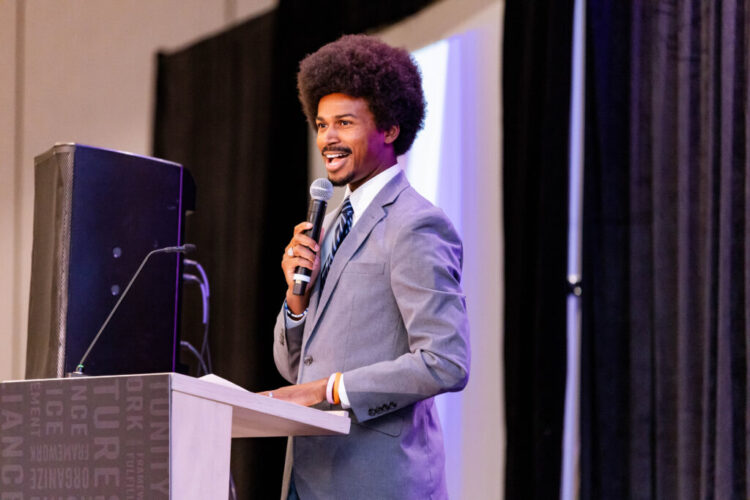
But the numbers only tell part of the story. Reading through participants’ reflections, what stood out was the way people talked about how the conference felt. They highlighted the spirit of the event. The opening keynote by Representative Justin Pearson and the closing remarks by Reverend Arline-Bradley framed the conference as a call to courage, community, and continued struggle. Attendees described these moments as “electrifying” and “life-changing.” Other standout sessions included Ashley Scott’s funding clinic, Isis Bey’s “Let the Circle Be Unbroken,” and Natalie Burke’s “Reimagining Public Health.” Many presentations were celebrated for blending practical strategies with cultural grounding. One participant wrote that Scott’s session “may have changed my life and the life of my community members.”
Across more than fifty sessions, participants found space not only to learn but to feel seen. As one attendee said, “This conference is the spring water to my soul—it grounds us in the marvelous work we do.” The conference functioned as both a professional learning convening and a space of social and emotional renewal.
From Knowledge to Action
Participants reported meaningful gains in both knowledge and practical skills. Based on the post conference survey, the strongest learning occurred in sustainable capacity-building, wellness and chronic disease reduction, and institutional reforms for health equity. Participants also reported growth in partnership development, advocacy strategies, and policy response tools. The conference’s emphasis on applied learning, through clinics, interactive sessions, and hands-on workshops, helped ensure that attendees left not just inspired but equipped.
Equally important was the sense of connection that took root. More than 80 percent of participants said they had ample opportunities to network and collaborate, often describing the experience as “a family reunion for health justice advocates.” The conference design intentionally blended formal and informal spaces. From structured meet-ups to spontaneous hallway conversation, attendees built trust and shared strategies. This spirit of solidarity was itself a form of healing.
Navigating the Political Climate
In today’s complex policy environment, many attendees described the conference as a stabilizing force—a place to find clarity and courage. Participants reported the most valued resources from the conference related to advocacy, legal guidance, and sustainable funding. They emphasized how sessions helped them interpret new executive orders, navigate shifting regulations, and sustain their work amid uncertainty.
One participant summarized it well stating: “This conference reminded me that resistance is part of progress.” For many, the knowledge shared on policy literacy, funding diversification, and community resilience transformed anxiety into action. Attendees left with new frameworks to guide their organizations and new allies to stand beside them.
Participants connected structural forces related to policy, economics, governance to the everyday work of clinics, coalitions, and community building. Public health was consistently framed as systems and structure, not just individual behavior or clinical care.
Strengthening the Path Ahead
The evaluation findings pointed not only to clear successes, but opportunities for continued growth. Participants called for more time for dialogue and reflection, longer workshops and clinics, and expanded topics such as mental health, housing, and environmental justice. They also asked for continued hybrid access and more structured networking to sustain relationships beyond the event.
Building on these insights, REA’s recommendations for future State of Black Health Conferences center on momentum and engagement. First, sustaining the energy beyond the convening through an online resource hub, virtual learning series, and year-round collaboration spaces. Second, enhancing organizational and policy capacity through deeper sessions on grant writing, sustainability, and legislative literacy would ensure attendees are not only inspired, but institutionally supported. Finally, continuing to center community voices—especially youth, elders, and grassroots leaders—will keep the conference grounded in the lived experiences that drive meaningful change. Sustaining the movement means investing in resilience, capacity, and action between conferences.
Health as Freedom
The 2025 State of Black Health Conference was more than a professional gathering. It was a living example of public health as cultural work. Across sessions and stories, participants and presenters reaffirmed that “the state of Black health is inseparable from the state of Black freedom.” By centering lived experience as expertise and community wisdom as evidence, the conference modeled storytelling, emotion, and data as tools of liberation. As the Center for Black Health & Equity and REA prepare to conduct a follow-up study to see how participants have applied what they learned, the message of this year’s convening endures: that progress in Black health is sustained not only through data and policy, but through connection, culture, and courage.
Through listening, learning, and leading together, the conference became what many described it as—a call to action. And like any true clarion call, its power lies not in the call itself but in the movement that comes after.
Check out the The Center For Black Health and Equity’s Newsletter on the 2025 State of Black Health Conference. The post includes the executive summary of REA’s final evaluation report.