Selected Projects Include
-

-
PBS Kids iPod App Study
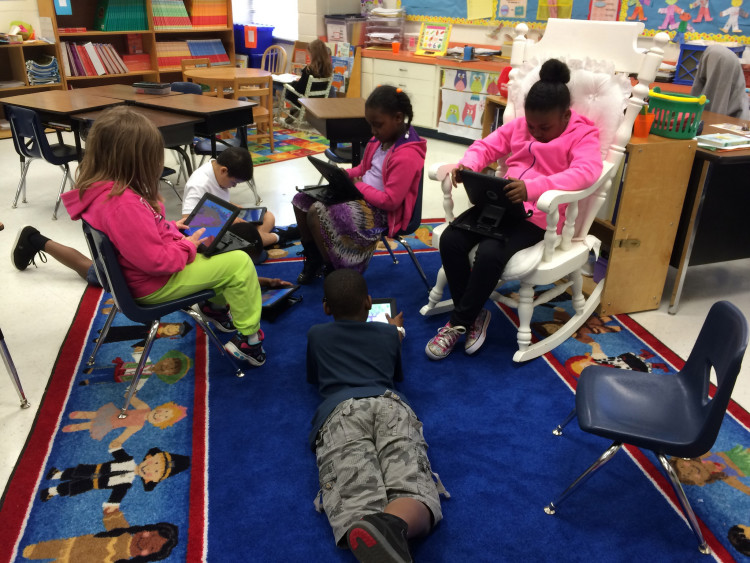
Rockman et al was commissioned by PBS Kids to assess learning outcomes and usage patterns among 3-7 year-olds exposed to two iPod Apps. Ninety iPod Touch devices were given to children from two Title I Schools in Washington D.C. and Bloomington, Indiana. The children were asked to use two apps: Super Why and Martha Speaks: Dog Party for a two-week period during the spring of 2010. Parents were asked to submit daily observation forms and complete short pre- and post-study surveys. Children were given pre- and post-study tests to assess their reading skills and specific content areas covered in the apps. Findings from this study were featured as part of the report by the Joan Ganz Cooney Center at Sesame Workshop’s report entitled: “Learning: Is there an app for that?”
-
Star Schools
Rockman et al conducted a three-year study of the impact of the online, Supplementary Education Services (SES) provided by Educate Online, Inc. (EO), funded by the Star Schools Program of the U.S. Department of Education. The evaluation activities under the grant measured the effectiveness of Catapult Online, a real-time, one-on-one tutoring service designed to address the needs of underserved rural, middle and high school students. The formative and summative evaluations examined online student assessment instruments, content, delivery mechanism, and the enhanced parental communication via mobile technology. REA also conducted a five-year evaluation of critical issues associated with the delivery of SES via online technologies in rural and urban areas. Among these issues were strategies for motivating and engaging middle and high schools students in remedial and supplemental programs, serving the needs of students with limited English proficiency, the impact of evolving technology platforms on the delivery of instructional programs, and emerging online assessments.
-
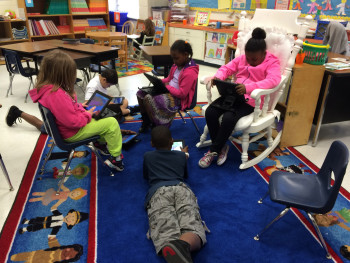 Photo courtesy of Amanda Golden via CC licensing.
 -
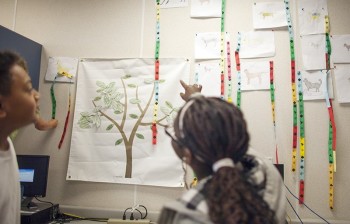 Photo courtesy of GSLC
 -
 Photograph courtesy of Mark Schierbecker via CC licensing.
 -
Virtual Clinical Trials at Rice University
In collaboration with Rice University’s Center for Technology in Teaching and Learning (CTTL), with funding from the National Institutes of Health (NIH) Blueprint for Neuroscience Research, REA evaluated the impact of three Virtual Clinical Trial simulations on high schoolers’ understanding of research design and neuroscience, and attitudes toward clinical trials. The studies, which used a randomized-controlled trial design, also investigated some of the program-related factors (e.g., satisfaction with the simulation) that may have influenced the observed outcomes.
-
Common Sense Media
Rockman et al conducted an evaluation to help Common Sense Media (CSM) review existing instruments and evaluation methodologies in the Parent Media Education program and to measure the outcomes of CSM’s educational programs in terms of parent and teacher satisfaction and implementation.
-
 Photo courtesy of PBS KIDS.
 -
Game-Enhanced Interactive Physical Science (GIPS)
Through funding from the NSF’s SBIR program, Filament Games developed a suite of online educational games and curricular activities for middle school classrooms that target core scientific concepts, such as engineering, plant genetics, and planetary characteristics. Rockman et al evaluated the “promise of efficacy” from each game via pre-post surveys, classroom observations, and embedded assessments, comparing content learning and engagement between students who played the game and engaged with the curricular activities, only played the game, or received traditional instruction. Differences in outcomes based on students’ interest in and aptitude for reading were also explored to ensure that the games were inclusive of a range of student abilities.